
Introducing
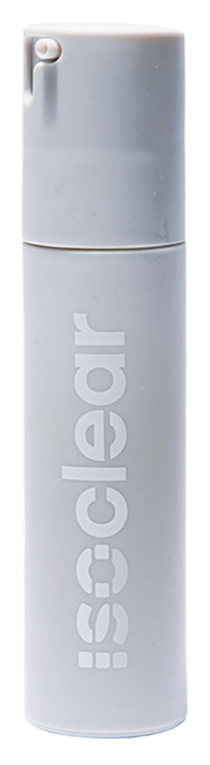
Isoclear™
topical Isotretinoin gel system
The Hollywood Dose
Micro-dose Protocol
for resistant acne
Who We Are
Our Story
FAQs
Contact Us
Blog
Explore
Success Stories
Standard Accutane vs Micro-dose Protocol
Pay over time with


For Emergencies:
Need emotional support? (24/7): Call or text 988
Emergency Services (24/7): Dial 911
View All
Isotretinoin (Accutane) Protocols
Standard Protocol
Micro-dose Protocol
Oral and Topical Treatments
Isoclear™
NewDoxycycline + Topical
Spironolactone + Topical
Compounded Topical
Supporting Products
Jojoba Oil Cleanser
Lightweight Moisturizer
Home Pregnancy Tests (6 ct)
Aquaphor (3 ct)
At-Home LFT + Lipid Panel Bloodwork Kit
Who We Are
Our Story
FAQs
Contact Us
Blog
Explore
Success Stories
Standard Accutane vs Micro-dose Protocol
Pay over time with
For Emergencies:
Need emotional support? (24/7): Call or text 988
Emergency Services (24/7): Dial 911
IMPORTANT SAFETY INFORMATION FOR ISOCLEAR™ (TOPICAL ISOTRETINOIN)
General Information
Isoclear™ is a compounded topical isotretinoin gel. This medication is a product that is topically applied to the skin for the treatment of acne vulgaris and/or other skin conditions as determined by your healthcare provider.Risks of Treatment with Topical Isotretinoin
Warnings, side effect profiles, and contraindications for Isoclear™ are discussed in detail below. Carefully review these warnings, side effects and contraindications. The side effects described in the section below are not all the possible side effects for these medications. If prescribed by your healthcare provider and you choose to begin treatment, make sure to talk to them about any side effect(s) that bother you or do not go away.Changes in Health Status or Medications
Inform your healthcare provider about any changes in your health status or medications. If you are given a new diagnosis by another healthcare provider, or start a new medication, inform your healthcare provider immediately.Patient Compliance
Please follow your healthcare provider's instructions carefully.Disclaimer
This safety information is provided to communicate the risks and alternative forms of treatment associated with Isoclear™. It is intended to cover principles of risk disclosure that generally meet the needs of most patients in most circumstances. However, it should not be considered all-inclusive in defining other methods of care and risks encountered. Your healthcare provider may provide you with additional or different information which is based on all the facts in your particular case and the current state of medical knowledge.This information is also not intended to define or serve as the standard of medical care. Standards of medical care are determined on the basis of all of the facts known in an individual case and are subject to change as scientific knowledge and technology advance and as practice patterns evolve.Method of Administration, Risks, Side Effects, and Advisories
This provides important information regarding risks and side effects of treatment with Isoclear™. Please read this carefully if you are considering taking this medication.Adults and Adolescents: Product Application
- Apply Isoclear™ sparingly over the whole affected area once or twice daily.
- Excessive application will not improve the effectiveness of the product, and may increase the risk of skin irritation.
- If excessive irritation (such as redness, peeling, or discomfort) occurs, reduce frequency of application or temporarily interrupt treatment.
- 6-8 weeks of treatment may be necessary before a therapeutic effect is observed.
- Treatment should be discontinued if the irritation persists.
- Hands should be washed after application.
- Due to the flammable nature of Isotretinoin, patients should avoid smoking or being near an open flame during application and immediately after use.
- Treatment is not available for patients under 12 years old.
Risks and Side Effects of Treatment
This medication has been specially prepared for you by a compounding pharmacy. It is not FDA-approved. Because it is not FDA-approved, it has not been evaluated by the FDA for safety, efficacy, or quality, and additional risks may exist.Please follow your healthcare provider's instructions carefully and report any unusual symptoms or side effects immediately.Contraindications
Hypersensitivity to the active substance, Isotretinoin, or to any of the excipients in the product. Isotretinoin is contraindicated in pregnancy and in women planning a pregnancy.Special Warnings and Precautions for Use
- Isotretinoin should be used with caution in patients with a history of local tolerability reactions or photo-allergy.
- Use with caution in patients with a personal or family history of skin cancer.
- Avoid contact with the mouth, eyes, mucous membranes, abraded or eczematous skin.
- Care should be taken not to let the medicine accumulate in any skin-fold areas and in the nasolabial folds.
- Butylated hydroxytoluene may cause local skin reactions (e.g. contact dermatitis), or irritation to the eyes and mucous membranes.
- Due to the irritant nature of Isotretinoin, use caution when applying to sensitive areas of skin, such as the neck, or patients with concomitant rosacea or perioral dermatitis.
- Concomitant topical acne therapy (i.e., medications used at the same time or accompanying use) should be used with caution because a cumulative irritant effect may occur. If irritation or dermatitis occur, reduce frequency of application or temporarily interrupt treatment, and resume once the irritation subsides. Treatment should be discontinued if the irritation persists.
- Because Isotretinoin may cause increased sensitivity to sunlight, avoid sunlamp use and avoid or minimize deliberate or prolonged exposure to sunlight. When exposure to strong sunlight cannot be avoided, patients should be advised to use a sunscreen product and wear protective clothing.
Interaction With Other Medicinal Products and Other Forms of Interaction
Concomitant application of oxidizing agents, such as benzoyl peroxide, should be avoided since they may reduce the efficacy of topical Isotretinoin. If combination therapy is required, the products should be applied at different times of the day (e.g., one in the morning and the other in the evening).Fertility, Pregnancy and Lactation
Pregnancy
Oral Isotretinoin is contraindicated in pregnancy, or in women planning a pregnancy. If the topical product is used during pregnancy, or if the patient becomes pregnant while taking this drug, treatment should be discontinued.Isoclear™ is applied directly to the skin's surface and is indicated only for topical use. However, orally administered retinoids including Isotretinoin have been associated with congenital abnormalities. When used in accordance with the prescribing information, topically administered retinoids are generally assumed to result in low systemic exposure due to minimal dermal absorption. However, there could be individual factors (e.g., damaged skin barrier, excessive use) that contribute to an increased systemic exposure.No specific contraceptive precautions are necessary for men using topical isotretinoin.Lactation/Breast-feeding
There is insufficient information on the excretion of topically applied Isotretinoin in human milk.A risk to the newborns/infants cannot be excluded.A decision must be made whether to discontinue breast-feeding or to discontinue/abstain from Isotretinoin therapy taking into account the benefit of breast-feeding for the child and the benefit of therapy for the woman.Fertility
There are no data on the effect of topical Isotretinoin on fertility in humans, but Isotretinoin in oral therapeutic dosages does not affect the number, motility, and morphology of sperm.