
Introducing
Isoclear™
topical Isotretinoin gel system

The Hollywood Dose
Micro-dose Protocol
for resistant acne

Who We Are
Our Story
FAQs
Contact Us
Blog
Explore
Success Stories
Standard Accutane vs Micro-dose Protocol
Pay over time with


For Emergencies:
Need emotional support? (24/7): Call or text 988
Emergency Services (24/7): Dial 911
View All
Isotretinoin (Accutane) Protocols
Standard Protocol
Micro-dose Protocol
Oral and Topical Treatments
Isoclear™
NewDoxycycline + Topical
Spironolactone + Topical
Compounded Topical
Supporting Products
Jojoba Oil Cleanser
Lightweight Moisturizer
Home Pregnancy Tests (6 ct)
Aquaphor (3 ct)
Who We Are
Our Story
FAQs
Contact Us
Blog
Explore
Success Stories
Standard Accutane vs Micro-dose Protocol
Pay over time with
For Emergencies:
Need emotional support? (24/7): Call or text 988
Emergency Services (24/7): Dial 911
The Accutane Stigma - Examining the Concerns

Written byMichael Chang
Medically reviewed byDr. Aaron Farberg MD FAAD
Published on09/23/2021
Here’s what we’ll cover
-1771011607-074007.jpg)
When we created Clear Health we thought long and hard about centering our initial focus on Accutane, a drug whose name triggers a rather polarizing response. If you Google around, people either seem to love it and stand by the phenomenal results or completely hate it, citing the potentially dangerous side effects that can occur including depression or Inflammatory Bowel Disease (IBD).
An oral medication that’s a derivative form of Vitamin A, Accutane stigma is well known in skincare circles. About 1 million people go on this highly regulated acne medication each year in the U.S. alone, and the administrative process is much more complex than any other acne prescription in existence for both patients and physicians.
So why choose it as our initial focus? Why are we looking to improve patient access to a medication that has received backlash from detractors, many of whom make perfectly valid points?
It all comes down to two fundamental beliefs that form the basis of Clear Health:
- That medications like Accutane can be life changing for the right patients when properly prescribed and administered by experienced board certified dermatologists
- That the current process for obtaining dermatologist-grade medications and obtaining proper skincare products + guidance to not only get skin clear, but also stay clear is fundamentally broken.
So let’s jump right into it. Is Accutane dangerous?
To answer this question we have to define what dangerous means.
I think for most people with acne, determining whether Accutane is dangerous or not hinges on the personal debate of whether the treatment results outweigh the treatment process and the potential risks.
When I was considering Accutane for myself, I considered the side effects that people and dermatologists talked about. Depression and suicidal thoughts. IBD. Hair loss. Body aches. I also considered my own chronic acne, and its impact on my life. Hiding from photos. Cancelling plans because I was embarrassed of my skin. Feeling self-conscious all the time, and having relatives point out the red bumps on your face, while being constantly frustrated and trying every other prescription, regimen tweak, and fad skincare trend that didn’t work.
I decided to go on Accutane because I thought the incredible, unparalleled results I saw from others who had been on the Accutane journey outweighed the potential risks.
Examining the Risks
Our belief at Clear Health is that if a patient is well-informed and educated while being properly monitored by an experienced board-certified dermatologist during treatment, then Accutane can be a viable treatment option for them if acne has a significantly adverse effect on their life.
Many medications come with a set of potential side effects, and Accutane is no different – it all comes down to a determination by the physician and patient on whether the benefits of Accutane are something that outweigh those risks, which we aim to mitigate as much as possible through our platform.
The most common side effects that patients experience are dry lips, dry nose, and dry mouth, and these symptoms can be largely controlled with a good skincare routine and some lip moisturizer.
The more serious side effects are the ones people tie to Accutane, yet how often do they occur? Let’s take a look:
Depression (<1%)
The #1 side effect that is tied to Accutane stigma is usually depression. Statistically, depression is an extremely rare side effect for Accutane patients with less than 1% reporting this symptom [1]. In fact, some dermatologists and psychologists point to the mental health risks of not prescribing an effective acne medication such as Accutane to people with chronic or severe acne. In a recent 2020 study, UC Riverside researchers urged prescribers to reconsider the stigma of Accutane as a “controversial drug” [2].
According to lead author and Clear Health advisor Danielle Samuels PhD, “The fact that the undertreatment of acne is itself related to depression and anxiety means that barring patients from effective acne treatment is likely counterproductive in reducing mental health risks.” The study also found that the strength of the association between acne and Accutane is similar to that of the psychological damage of cyberbullying [2].
Anecdotally, let’s think about who has acne and goes on Accutane – it’s usually teenagers and young adults, a subset of the population that’s likely to be more self-conscious about their appearance especially in the Tik Tok and IG generation. This group is already more prone to low self-esteem, and given the magnitude of current societal pressures on appearances, a link between having chronic acne and depression makes sense.
Can Accutane, the most powerful acne drug ever created, be a cause of depression? Absolutely possible. Is it likely? Probably not. In fact, many studies point to the opposite, with patients reporting elevated levels of happiness after a course now that their skin is clear [3].
IBD (<1%)
IBD or Inflammatory Bowel Disease (such as ulcerative colitis) is characterized by diarrhea, fatigue, and abdominal pain due to inflammation in the digestive tract. Some studies show a stronger link between Accutane and IBD, while others show a minimal one.
In a population-based, case-control study, the incidence of IBD was 1.2% in patients who have taken Accutane, vs 1.1% in patients who have not. Additional studies point to the fact that causation/correlation aside, the absolute risk of developing IBD as a consequence of taking Accutane is quite rare [4]
Birth Defects (monitored through iPLEDGE)
Female patients on Accutane are intimately familiar with the iPLEDGE program, which is a defining characteristic of Accutane treatment in the United States. Accutane causes birth defects in unborn babies in a pregnant woman, which is why female patients must either pledge abstinence or be on two forms of contraception during treatment.
This is another side effect that’s tied to Accutane infamous reputation, albeit one that is very controlled. A 2016 study suggests Accutane birth rates of around 16 cases for every 1000 patients, or 1.6%. Unlike the other two side effects, this one is more in the patient and doctor’s control due to strict monitoring guidelines. Accutane is usually out of a patient’s blood completely 9 days after use, and it is safe for females to get pregnant one month post-Accutane. No effects have been reported for men on Accutane who are trying to conceive.
Of course, even if side effects are rare, they still have a chance of happening. However this does also beg the question – why does Accutane have such a controversial reputation given the statistically low probability of serious side effects occurring?
I think part of the reputation does come from the serious side effects themselves, but a large portion of the stigma can also be attributed to the drug’s complicated administrative process – specifically, keeping on top of the iPLEDGE program requirements, with things like bloodwork, insurance prior authorizations, monthly derm visits, and contraception/pregnancy test requirements (for female patients).
We specifically designed the Clear Health platform to not only mitigate the risks and make the Accutane treatment as safe as possible, but we also sought to streamline this process. Instead of having to remember to do all these things, we brought what was once a pen and paper process online, where patients get timely reminders and are guided every step of the way while being introduced to top notch skincare and proper habits to not only get clear, but stay clear.
I want to reiterate here. We’re NOT trying to push Accutane as a treatment on people.
Our mission with Clear Health is to help you on your skincare journey, and if Accutane may be a part of it like it is for so many people, then we want to make that process as stress-free and enjoyable as possible. We believe a seamless experience should be an option for anyone who may be considering going on Accutane, and that price, geographical access, scheduling, or tedious admin requirements should not be a limiting factor.
Having acne is a gateway into skincare for many, and Accutane can be an integral part of that journey. I know for me, determining whether or not to go on Accutane prompted me to start getting serious about skincare and learning about all the other variables on how to keep my skin clear. We’re of the school of thought that a medical and holistic approach can coexist, and that discounting either of them is counterproductive to achieving optimal results.
FYI going on Accutane doesn’t mean you’ll NEVER get a pimple again…….which is totally normal. Acne itself is something that’s totally okay and shouldn’t be something to be ashamed of :)
Achieving your best skin is never just about one product, one prescription, or one thing, and the skincare journey can be tough. We’d love to be your partner on it to make it just a bit easier.
Let me know how I can help,
Michael
CEO and Founder
- Singer S, Tkachenko E, Sharma P, Barbieri JS, Mostaghimi A. Psychiatric Adverse Events in Patients Taking Isotretinoin as Reported in a Food and Drug Administration Database From 1997 to 2017. JAMA Dermatol. 2019;155(10):1162-1166. doi:10.1001/jamadermatol.2019.1416
- Samuels D, Rosenthal R, Lin R, Chaudhari S, Natsuaki M. Acne vulgaris and risk of depression and anxiety: A meta-analytic review. J Am Acad Dermatol. 2020. 83; 532-541
- Li C, Chen J, Wang W, Ai M, Zhang Q, Kuang L. Use of isotretinoin and risk of depression in patients with acne: a systematic review and meta-analysis [published correction appears in BMJ Open. 2019 Mar 15;9(3):e021549corr1]. BMJ Open. 2019;9(1):e021549. Published 2019 Jan 21. doi:10.1136/bmjopen-2018-021549
- Secrest AM, Hopkins ZH, Frost ZE, et al. Quality of Life Assessed Using Skindex-16 Scores Among Patients With Acne Receiving Isotretinoin Treatment. JAMA Dermatol. 2020;156(10):1098-1106. doi:10.1001/jamadermatol.2020.2330
- Coughlin SS. Clarifying the Purported Association between Isotretinoin and Inflammatory Bowel Disease. J Environ Health Sci. 2015;1(2):10.15436/2378-6841.15.007. doi:10.15436/2378-6841.15.007
Related Stories
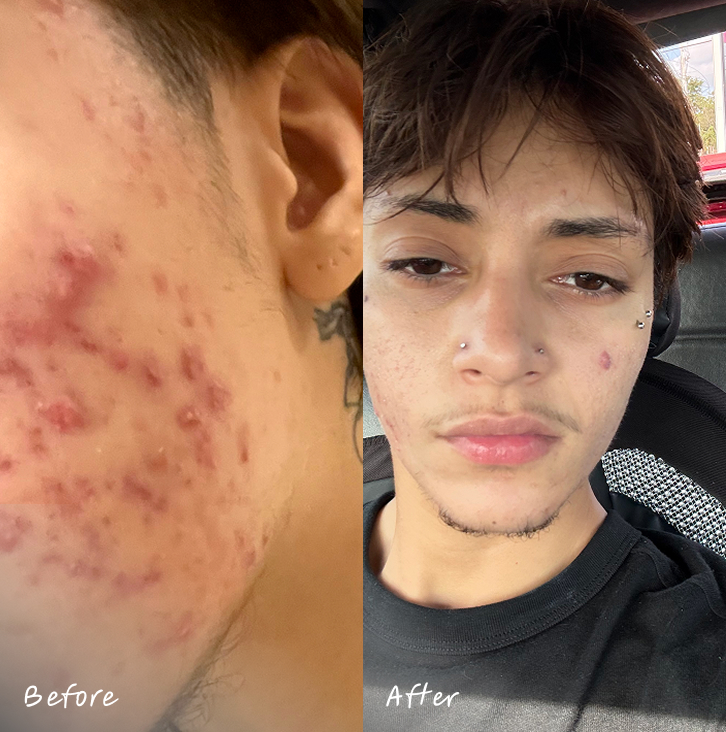
“I Wish I Tried It Sooner”: Esteban’s Isoclear Experience
Written by Erika Morrison
Published on 10/23/2026
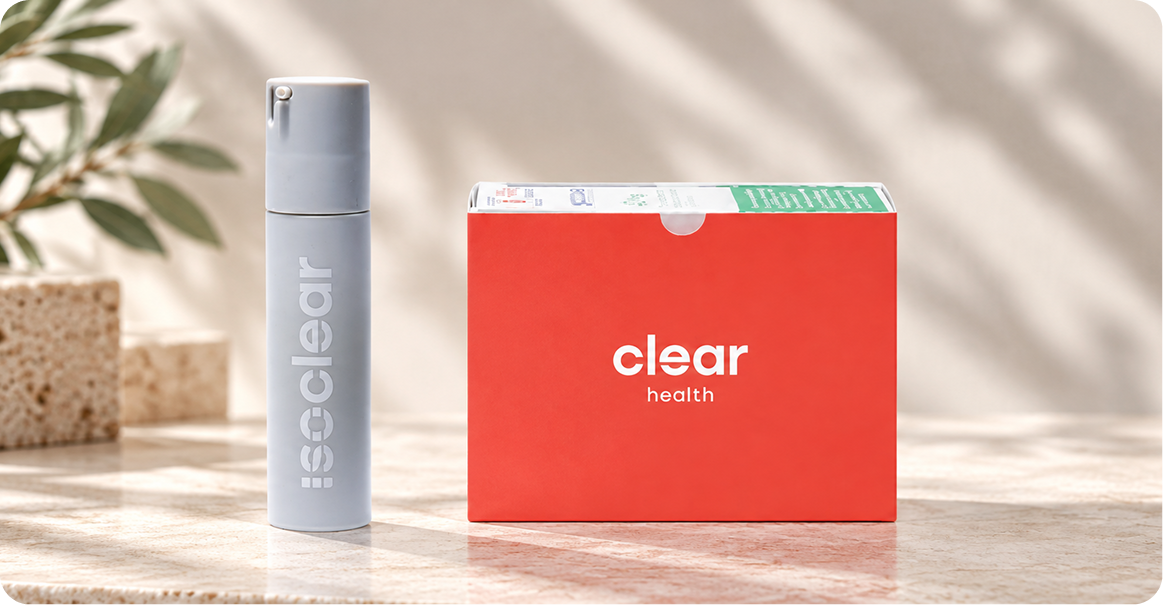
Oral Accutane vs. Isoclear (Topical Isotretinoin)
Written by Michael Chang
Published on 10/16/2026
Can You Wear Makeup on Accutane?
Written by Erika Morrison
Published on 10/09/2026

View All