Acne during menopause and perimenopause can feel frustrating, and it’s often tied to hormone levels.
In this blog, we’ll talk about why acne breakouts happen, how changes in hormone levels can play a role, and what treatment options are available, including topical treatments and prescriptions.
Why Do Hormonal Imbalances Lead to Acne?
Acne forms when sebaceous glands produce too much oil (sebum). This excess sebum, along with dead skin cells, clogs hair follicles, causing pimples, blackheads, and sometimes painful cystic acne. At least four factors cause acne: too much sebum production, clogged follicles, imbalance in skin bacteria, and inflammation Wikipedia.
During menopause, estrogen declines faster than male hormones like testosterone. This imbalance triggers the sebaceous glands to pump out more oil, making it easier for hair follicles to get blocked, leading to menopause acne, menopause pimples, or cystic acne perimenopause.
Can Low Estrogen Cause Acne?
Yes, low estrogen acne is a key trigger.
Estrogen normally helps regulate oil production and supports healthier skin. When estrogen drops during perimenopause, the body may produce more production of sebum, which can lead to acne.
Can High Estrogen Cause Acne?
Although less common, high estrogen or estrogen dominance, where estrogen is high relative to progesterone, can also trigger acne. It may increase oiliness and inflammation, and even affect some men (does high estrogen cause acne in males).
How Long Does Menopause Acne Last?
Unfortunately, there’s no fixed time. For some, acne flares for a few months; for others, it can last years until hormone balance is restored. Without treatment, inflammation may lead to scarring or dark spots, so long term effects are real.
Types of Acne During Menopause
- Menopause acne cysts: deep under-skin nodules.
- Cystic acne perimenopause: painful bumps that stay under the skin.
- Common on the chin, jawline, chest, and sometimes back.
These often resist topical treatments alone and need stronger solutions.
Treatment Options and Remedies
- Topical Treatments
- Benzoyl peroxide is effective at reducing acne by killing C. acnes bacteria and breaking down oil clogs. It is both sebostatic and comedolytic.
- Salicylic acid helps exfoliate and unclog pores, but may irritate drier, low-estrogen skin, so use cautiously.
- Chemical peels or retinoids can improve skin cell turnover and reduce comedones over time.
- Hormonal Treatments
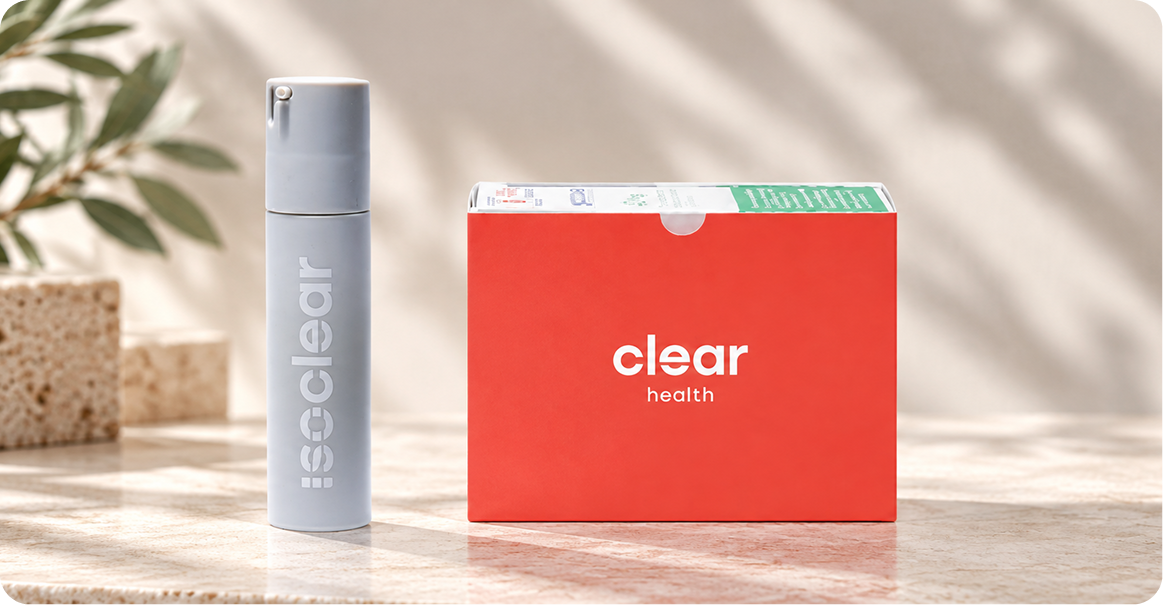
- Spironolactone (an anti-androgen) blocks testosterone effects and helps with hormone-related acne. Clear Health offers Spironolactone + Topical which is an oral treatment for female patients that works well for acne caused by hormonal fluctuations.
- Oral contraceptives can adjust estrogen and progesterone levels. Some types may worsen acne in menopausal users, so medical supervision is essential.
- Lifestyle Tips
- Eat a balanced diet and manage stress.
- Menstrual cycle fluctuations can trigger acne; tracking can help anticipate flare-ups.
- Be gentle with your skin routine. Avoid over-washing, and use moisturizers to protect your skin barrier.
Clear Health’s Micro-dose Protocol: A Modern Option
For stubborn or cystic menopause acne, standard treatments might not be enough.
Clear Health’s Micro-dose Protocol offers a low-dose isotretinoin regimen that helps:
- Reduce sebum production in sebaceous glands, shrink gland size, and fight C. acnes bacteria, all four root processes of acne.
- Helps improve skin within weeks with smaller doses (e.g. 5 mg-20 mg per day or a few times per week), which cut long term side-effects compared to traditional doses. Dermatology Times
- Provide treatment via telehealth, with home delivery and 24/7 nurse support for monitoring and safety.
This approach is especially helpful for menopause-related acne tied to hormonal imbalances or cystic acne that doesn’t respond to OTC or topical care.
FAQs & Key Terms
- What triggers acne? Hormonal imbalances, changes in estrogen or testosterone, stress, and shifts in the menstrual cycle can all play a role.
- Do benzoyl peroxide and salicylic acid help? Yes, benzoyl peroxide is strong against bacteria and oil. Salicylic acid is good for exfoliation but needs caution with dry, aging skin.
- What are chemical peels? Light acid-based treatments to exfoliate and clear clogged pores. Can help reduce blackheads, pimples, and inflammatory bumps.
Final Thoughts
- Hormonal imbalances, especially lowering estrogen during menopause, often lead to acne by increasing sebum production and blocking hair follicles.
- Treatments like benzoyl peroxide, salicylic acid, hormonal therapy, and chemical peels may help mild-to-moderate cases.
- For cystic or long-term acne, Clear Health’s Micro-dose Protocol, low-dose isotretinoin with monitoring, provides a modern, effective solution with fewer side effects.
- Combine medical treatment with skincare, stress management, and healthy habits to support skin health.
- Rao, A., Douglas, S.C., Hall, J.M. (2021). Endocrine Disrupting Chemicals, Hormone Receptors, and Acne Vulgaris: A Connecting Hypothesis. Frontiers in Endocrinology.https://pmc.ncbi.nlm.nih.gov/articles/PMC8228950/
- Iqbal, J., & Zaidi, M. (2009). Understanding Estrogen Action during Menopause. Endocrine Reviews.https://pmc.ncbi.nlm.nih.gov/articles/PMC2717878/
- Khunger, N., & Mehrotra, K. (2019). Menopausal Acne - Challenges And Solutions. Clinical, Cosmetic and Investigational Dermatology.https://pmc.ncbi.nlm.nih.gov/articles/PMC6825478/
- Andrus, E. (2024). Insights Into Clear Health’s Low-Dose Microdose Accutane Protocol For Mild Acne. Dermatology Times.https://www.dermatologytimes.com/view/insights-into-clear-health-s-low-dose-microdose-accutane-protocol-for-mild-acne
- Menopause Acne?! Why It Happens and How To Treat Your Skin. Pausitive Health.https://www.pausitivehealth.com/menopause-acne