
Introducing
Isoclear™
topical Isotretinoin gel system

The Hollywood Dose
Micro-dose Protocol
for resistant acne

Who We Are
Our Story
FAQs
Contact Us
Blog
Explore
Success Stories
Standard Accutane vs Micro-dose Protocol
Pay over time with


For Emergencies:
Need emotional support? (24/7): Call or text 988
Emergency Services (24/7): Dial 911
View All
Isotretinoin (Accutane) Protocols
Standard Protocol
Micro-dose Protocol
Oral and Topical Treatments
Isoclear™
NewDoxycycline + Topical
Spironolactone + Topical
Compounded Topical
Supporting Products
Jojoba Oil Cleanser
Lightweight Moisturizer
Home Pregnancy Tests (6 ct)
Aquaphor (3 ct)
Who We Are
Our Story
FAQs
Contact Us
Blog
Explore
Success Stories
Standard Accutane vs Micro-dose Protocol
Pay over time with
For Emergencies:
Need emotional support? (24/7): Call or text 988
Emergency Services (24/7): Dial 911
Does Prescription Acne Treatment Help Dark Spots or Make Them Worse?

Written byErika Morrison
Published on02/16/2026
Here’s what we’ll cover
- What is post-inflammatory hyperpigmentation (PIH)?
- Does prescription acne treatment help with hyperpigmentation?
- Does prescription acne treatment help with dark spots? (And does it lighten your skin?)
- Why hyperpigmentation can feel worse during treatment
- Treating hyperpigmentation during acne treatment
- Chemical peels and in-office treatments during acne treatment
- Common side effects and safety notes you should know
- What to expect long term
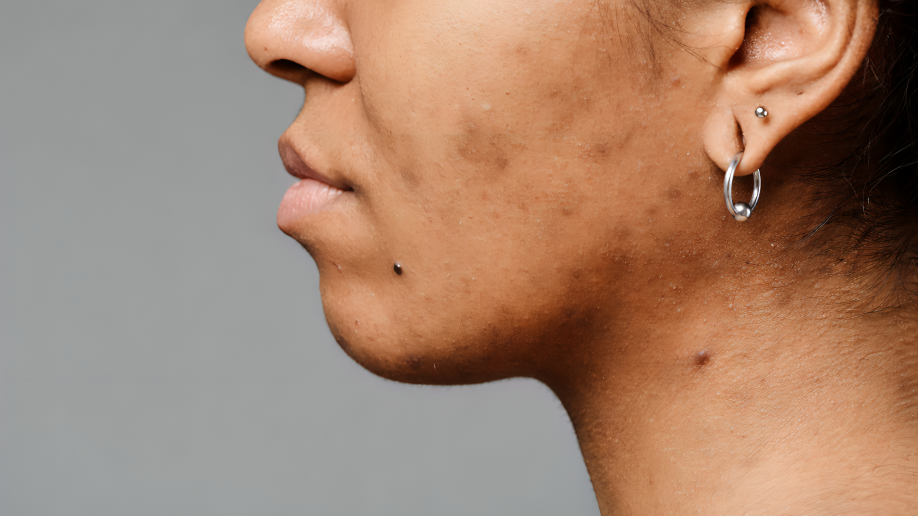
If you’re dealing with post-inflammatory hyperpigmentation (PIH), those lingering dark spots left behind after acne heals, it’s normal to wonder:
- Does prescription acne treatment help with hyperpigmentation?
- Does it get rid of hyperpigmentation long term?
- Can you treat hyperpigmentation while on this kind of treatment without irritating your skin?
Let's break down what a strong prescription acne treatment can realistically do for pigmentation, what it can't do, and how to approach treating hyperpigmentation while on it safely.
What is post-inflammatory hyperpigmentation (PIH)?
PIH is a type of discoloration that happens when your skin produces extra pigment after inflammation or injury such as acne breakouts, irritation, or any “wound healing” moment like picking or scratching. It can show up as brown, red, or purple marks, and it often lingers longer in deeper skin tones.
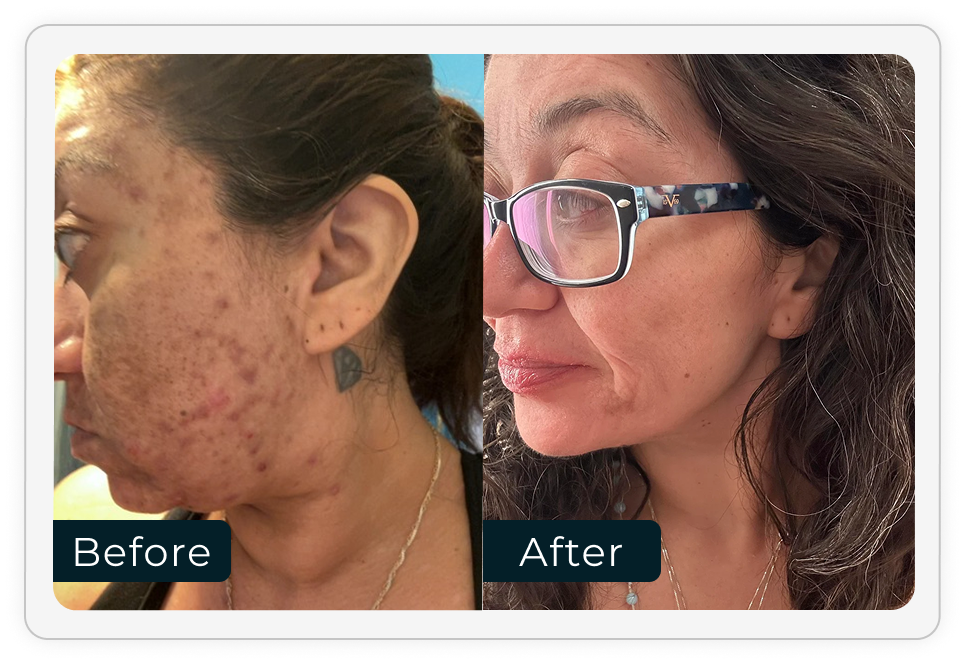
PIH is not the same as acne scarring:
- PIH = pigment left behind (flat discoloration)
- Acne scarring = texture change (pits, raised scars)
Does prescription acne treatment help with hyperpigmentation?
It can help indirectly (by stopping the acne that causes PIH)
Strong prescription acne treatments target acne at the source, reducing oil production from the sebaceous glands and helping prevent new inflammatory breakouts (the main trigger for PIH). When you get fewer breakouts, you create fewer new dark spots.
But this kind of treatment usually does not "erase" existing dark spots on its own.
Most existing PIH fades through your skin's natural healing process and skin cell turnover over time. It doesn't function like a dedicated pigment-corrector the way certain topical treatments do (like azelaic acid or brightening agents used under medical supervision).
So if you're asking: Does this get rid of my hyperpigmentation? It can help prevent new PIH by controlling acne, but it's not a guaranteed "dark spot remover."
Does prescription acne treatment help with dark spots? (And does it lighten your skin?)
It's not a skin-lightening medication.
It isn't designed to "lighten" skin overall. If someone looks brighter over time, it's usually because:
- Active acne calms down
- Inflammation decreases
- Fewer new marks form
- And PIH slowly fades
Why hyperpigmentation can feel worse during treatment
Even though these treatments address acne, they can also make skin more reactive. Some people notice PIH more during treatment because:
- Skin irritation + dryness can increase inflammation (which can worsen discoloration in some people).
- Picking dry flakes or acne bumps can create new “wounds” → new PIH.
- Sun exposure can darken existing pigment (PIH is very UV-sensitive).
Treating hyperpigmentation during acne treatment
Because this kind of treatment can make your skin more sensitive, the goal is to fade dark spots without triggering more irritation.
1. Sunscreen is non-negotiable
UV exposure can make dark spots look darker. We highly recommend using daily broad-spectrum sunscreen for preventing hyperpigmentation.
2. Use gentle topical treatments that are commonly used for PIH
Reputable dermatology sources often recommend the following topical treatments for treating hyperpigmentation, including post-inflammatory hyperpigmentation (PIH) and dark spots:
- Azelaic acid, which can help fade discoloration while being generally well tolerated.
- Brightening treatments, typically used under prescription or close medical supervision.
- Vitamin C, known to support brighter-looking skin and improved tone.
- Certain retinoids, which can support skin cell turnover, though layering retinoids during this kind of treatment is frequently too irritating for many people and should only be considered with professional guidance.
- Other brightening ingredients such as kojic acid, licorice extract, and niacinamide, which are often better tolerated by sensitive or compromised skin.
Important: During this kind of treatment, your skin is already more delicate and prone to irritation. Treating hyperpigmentation usually requires a slower, more minimal approach than standard dark spot routines. Always speak with your dermatologist before adding any new topical treatments, as some ingredients, even commonly used ones, may further irritate your skin and disrupt the healing process.
3. Protect your barrier first
PIH fades faster when inflammation stays low. Prioritize:
- Non-comedogenic lightweight moisturizer
- Gentle cleanser
- No aggressive scrubbing
- Avoid “stacking” too many activities at once
- This helps reduce irritation-driven pigmentation
Chemical peels and in-office treatments during acne treatment
You’ll still see advice online saying “no procedures for 6–12 months,” but newer reviews have questioned how strong the evidence is for universally banning all procedures. Always speak to your board-certified dermatologist about when is the perfect time to get in-office treatments.
 View on youtube
That said, deep peels and aggressive resurfacing can be higher risk, and decisions should be individualized and supervised by a qualified clinician, especially if you’re prone to PIH.
Common side effects and safety notes you should know
This is an effective option, but it involves a serious medication with known risks and monitoring requirements:
- Severe birth defects risk if pregnancy occurs during use; strict pregnancy prevention rules apply (U.S. iPLEDGE program)
- Blood tests may be used to monitor things like lipids and liver-related labs, depending on your prescriber’s protocol
- Inflammatory bowel disease (IBD): the relationship has been debated; evidence on causation remains under evaluation
What to expect long term
PIH often improves, but it’s usually a slow healing process, measured in months, not days. The best “long term” strategy is:
- Stop the acne cycle
- Prevent new inflammation
- Protect from UV
- Use tolerable topical treatments consistently
If you’re dealing with acne and stubborn dark spots, it helps to have a clinician-guided plan that keeps treatment effective while minimizing unnecessary irritation.
Clear Health offers dermatologist-guided acne care (including standard & personalized treatment protocols when appropriate), with monitoring and support built into the process, so you’re not guessing what’s safe to combine, when to pause actives, or how to handle side effects.
Micro-dose Accutane, Expert-Guided Treatment with All-Inclusive Care
Start Online EvaluationWorried that you're not a candidate? If the physician deems you ineligible for any treatments your initial consultation is FREE - we'll refund you in full automatically.
- U.S. Food & Drug Administration (FDA) — Prescribing information / drug label for oral acne medication
- REMS program overview — risk management protocol for teratogenicity
- MedlinePlus (NIH) — Drug information (warnings, pregnancy risk, side effects)
- American Academy of Dermatology (AAD) — Patient safety (side effects, IBD discussion, monitoring considerations)
- DermNet NZ — Post-inflammatory hyperpigmentation (causes and treatment options)
- Davis EC, Callender VD. Postinflammatory hyperpigmentation: a review. (NIH/PMC)
- Spring LK, et al. Timing of procedural interventions during acne treatment (systematic review). JAMA Dermatology.
- Ahmed A, et al. Risk for inflammatory bowel disease with oral acne medication: meta-analysis/systematic review. Journal of the American Academy of Dermatology.
Related Stories
Oral Accutane vs. Isoclear (Topical Isotretinoin)
Written by Michael Chang
Published on 10/16/2026
Can You Wear Makeup on Accutane?
Written by Erika Morrison
Published on 10/09/2026

Here’s what you don’t need to do when starting Isoclear (& what you still need to do)
Written by Erika Morrison
Published on 10/02/2026
View All