
Introducing
Isoclear™
topical Isotretinoin gel system

The Hollywood Dose
Micro-dose Protocol
for resistant acne

Who We Are
Our Story
FAQs
Contact Us
Blog
Explore
Success Stories
Standard Accutane vs Micro-dose Protocol
Pay over time with


For Emergencies:
Need emotional support? (24/7): Call or text 988
Emergency Services (24/7): Dial 911
View All
Isotretinoin (Accutane) Protocols
Standard Protocol
Micro-dose Protocol
Oral and Topical Treatments
Isoclear™
NewDoxycycline + Topical
Spironolactone + Topical
Compounded Topical
Supporting Products
Jojoba Oil Cleanser
Lightweight Moisturizer
Home Pregnancy Tests (6 ct)
Aquaphor (3 ct)
At-Home LFT + Lipid Panel Bloodwork Kit
Who We Are
Our Story
FAQs
Contact Us
Blog
Explore
Success Stories
Standard Accutane vs Micro-dose Protocol
Pay over time with
For Emergencies:
Need emotional support? (24/7): Call or text 988
Emergency Services (24/7): Dial 911
Does Accutane Make Your Nose Smaller?

Written byErika Morrison
Published on05/15/2026
Here’s what we’ll cover
- What Is “Accutane Nose”?
- Does Accutane Make Your Nose Smaller?
- Why Does Accutane Make Your Nose Smaller for Some People?
- Does Accutane Shrink Your Nose Permanently?
- Accutane Nose Before and After: What You May Notice
- Can Accutane Shrink Your Nose If You Don’t Have Acne?
- Does Accutane Change Your Nose Shape?
- Accutane Shrinks Nose Before and After Side Effects: What to Know
- Starting Accutane: What to Expect
- Additional Treatments That May Help Acne and Skin Texture
- When to See a Board-Certified Dermatologist
- Key Takeaway
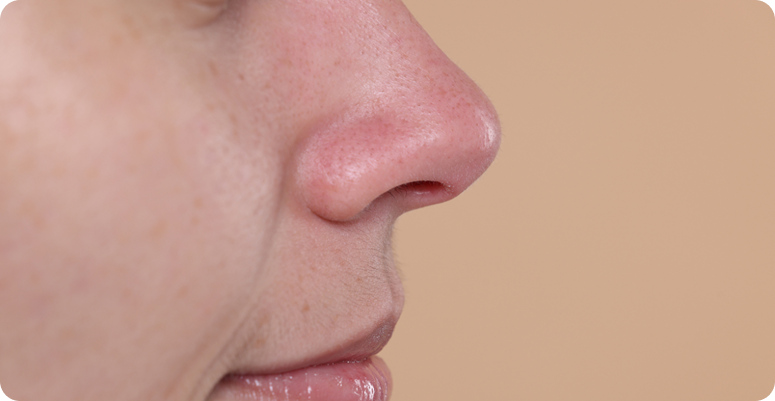
If you’ve been on TikTok lately, you may have seen videos talking about the so-called “Accutane nose job”, with people claiming their nose looked smaller after taking isotretinoin. Searches like “Accutane nose before and after” and “does Accutane make your nose smaller” have become more common as these before-and-after posts spread online.
So, is “Accutane nose” real?
The short answer: Accutane, also known as isotretinoin, does not work like a nose job. It does not change your bone or cartilage structure. But for some people with oily or acne-prone skin, large pores, thick nasal skin, or clogged pores around the nose, isotretinoin may make the nose look slightly smaller or more refined by reducing oil production and shrinking sebaceous oil glands.
This is why some people notice what they call Accutane nose shrinkage.
What Is “Accutane Nose”?
“Accutane nose” is a popular term people use when their nose appears smaller, less swollen, or less oily while taking isotretinoin.
This can happen because isotretinoin affects the oil gland, also called the sebaceous gland. These glands produce sebum, the oily substance that can contribute to clogged pores, shiny skin, and acne.
Isotretinoin works partly by:
- Reducing sebaceous gland size
- Reducing sebum and oil production
- Helping prevent clogged pores
- Improving inflammation related to acne
- Improving overall skin texture
Because the nose has many sebaceous oil glands, changes in oil production can be especially noticeable there.
Does Accutane Make Your Nose Smaller?
Accutane may make your nose look smaller, but it does not physically shrink the structure of your nose.
Your nose is made of bone, cartilage, soft tissue, and skin. Isotretinoin does not change the bone or cartilage the way a nose job or rhinoplasty would.
However, isotretinoin may reduce:
- Oiliness
- Clogged pores
- Swelling from inflamed acne
- Thick, bumpy-looking nasal skin
- The appearance of enlarged pores
- Sebaceous gland activity
So, when people ask, “can Accutane make your nose smaller?” the more accurate answer is:
It may make the nose appear smaller in some people by reducing oil production, sebaceous gland size, and skin congestion, but it is not a cosmetic nose-shrinking treatment.
Why Does Accutane Make Your Nose Smaller for Some People?
The nose can look larger when the skin is very oily, congested, inflamed, or thick. This is especially common for people with:
- Cystic acne
- Hormonal acne
- Oily or acne-prone skin
- Enlarged pores
- Clogged pores around the nose
- Thicker nasal skin
- Sebaceous gland overactivity
Isotretinoin helps by reducing sebaceous gland activity and reducing oil production. In older research, isotretinoin was shown to cause a major reduction in sebum production and sebaceous gland size after treatment.
That reduction in oil can make the nose look less shiny, less puffy, and smoother in texture.
Does Accutane Shrink Your Nose Permanently?
This depends.
Some people notice their nose looks smaller while they are on isotretinoin because their oil production is much lower. After treatment, some oil production may return over time. Long-term studies have found that sebaceous gland activity can remain reduced in some patients, but it may return closer to pretreatment levels in others.
So, is Accutane nose permanent?
For some people, the smoother skin texture and reduced oiliness may last. For others, some oil production may come back after stopping treatment.
It’s also important to remember: if your nose looked smaller because acne inflammation, clogged pores, or excess oil improved, the effect may depend on how your skin behaves after treatment.
Accutane Nose Before and After: What You May Notice
People who post Accutane nose before and after photos may notice:
- Less shine
- Smaller-looking pores
- Smoother skin texture
- Less redness from acne
- Less congestion around the nose
- A less swollen or bulbous appearance
- Fewer clogged pores and blackheads
But these changes are usually related to the skin, not the actual nose structure.
Accutane does not replace rhinoplasty. It should not be used as a nose job alternative.
Can Accutane Shrink Your Nose If You Don’t Have Acne?
Isotretinoin is a prescription acne medication. It is usually used for severe acne, cystic acne, nodular acne, or acne that has not improved with other treatments. Mayo Clinic notes that isotretinoin is used for severe nodular acne, usually after other acne medicines have not helped enough.
It should not be taken only to shrink your nose.
This medication can have serious side effects and requires medical supervision. A board-certified dermatologist can help decide whether isotretinoin is appropriate for your acne, skin type, health history, and goals.
Does Accutane Change Your Nose Shape?
Accutane can change the way your nasal skin looks, but it does not reshape your nose.
It may improve:
- Skin thickness appearance
- Oiliness
- Pore congestion
- Skin texture
- Acne inflammation
- Sebaceous oil gland activity
It does not change:
- Nose bone
- Nose cartilage
- Nasal bridge height
- Nostril shape
- Overall structural anatomy
So, when people ask “does Accutane change your nose?”, the safest answer is:
It may change the appearance of the skin on your nose, but it does not change the actual structure of your nose.
Accutane Shrinks Nose Before and After Side Effects: What to Know
While some people focus on the possible cosmetic effect, isotretinoin is a serious medication. It can be very effective for acne, but it also has risks.
Common side effects may include:
- Dry lips
- Dry skin
- Dry eyes
- Dry nose or nosebleeds
- Sun sensitivity
- Temporary acne flare
- Skin irritation
More serious risks can include lab changes, liver-related concerns, mood changes, and severe birth defects if taken during pregnancy. The American Academy of Dermatology notes that dermatologists monitor patients carefully during isotretinoin treatment and that pregnancy prevention requirements are extremely important because isotretinoin can cause severe birth defects.
DermNet also notes that mood effects are a controversial area, and that acne itself can affect mental health. Patients should tell their clinician about mood changes, depression, anxiety, or other mental health concerns during treatment.
Starting Accutane: What to Expect
Before starting Accutane or isotretinoin, your dermatologist may review:
- Your acne type and severity
- Your previous acne treatments
- Your medical history
- Your current medications
- Pregnancy prevention requirements, if applicable
- Lab testing needs
- Your mental health history
- Your skin sensitivity and dryness risk
During treatment, your dermatologist may also monitor your progress, side effects, and dose.
Because isotretinoin works by reducing sebaceous gland activity and reducing oil production, dryness is expected. This is why gentle skincare is important while on treatment.

Book an Appointment with
a Dermatologist
Every Clear Health treatment begins with a licensed, board-certified dermatologist reviewing your skin and guiding your care - safely, thoughtfully, and personally.
Start Online EvaluationAdditional Treatments That May Help Acne and Skin Texture
Not everyone needs isotretinoin. Depending on your acne type, your dermatologist may recommend other options before or alongside treatment.
Additional treatments may include:
- Prescription topical retinoids
- Benzoyl peroxide
- Topical or oral antibiotics
- Hormonal acne treatments
- Azelaic acid
- Gentle, non-comedogenic moisturizers
- Oil-free sunscreen
- Chemical peels or procedures after acne is controlled
- Treatments for acne scars or uneven skin texture
For cystic acne, severe acne, or acne that keeps coming back, isotretinoin may be considered when other treatments are not enough.
When to See a Board-Certified Dermatologist
You should consider seeing a dermatologist if you have:
- Painful cystic acne
- Acne that leaves dark marks or scars
- Hormonal acne that keeps returning
- Oily or acne-prone skin that does not respond to over-the-counter products
- Severe clogged pores or inflamed breakouts
- Acne affecting your confidence or mental health
- Questions about starting Accutane
A dermatologist can help you understand whether isotretinoin is right for your skin, and whether the changes you want are realistic.
Book an Appointment with
a Dermatologist
Every Clear Health treatment begins with a licensed, board-certified dermatologist reviewing your skin and guiding your care - safely, thoughtfully, and personally.
Start Online EvaluationKey Takeaway
Accutane can make the nose look smaller for some people, especially if they have oily skin, enlarged pores, clogged pores, thick nasal skin, or acne-related inflammation around the nose.
But Accutane does not work like a nose job. It does not change your bone or cartilage. The “Accutane nose shrink” effect is usually due to changes in the skin, oil glands, and sebum production.
If you’re thinking about starting Accutane, the best next step is to speak with a dermatologist.
This content is for educational purposes only and is not medical advice. Isotretinoin is a prescription medication and may not be appropriate for everyone. Treatment should only be started under the care of a licensed healthcare provider.
Results vary by patient. Accutane/isotretinoin does not replace rhinoplasty or any cosmetic nose procedure and does not change the bone or cartilage structure of the nose.
- American Academy of Dermatology Association — Isotretinoin: The truth about safety, side effects, and skin care.
- Mayo Clinic — Isotretinoin oral route: description, side effects, and use for severe nodular acne.
- DermNet — Isotretinoin: uses, side effects, pregnancy precautions, and mental health discussion.
- DermNet — Psychological effects of acne.
- Goldstein JA, et al. — Isotretinoin in the treatment of acne: histologic changes and reduction in sebaceous gland size/sebum production. PubMed.
- Strauss JS, et al. — Changes in long-term sebum production from isotretinoin therapy. PubMed.
- NCBI Bookshelf / StatPearls — Isotretinoin mechanism: reducing sebaceous gland size, sebum production, keratinization, and inflammation.
Related Stories
Can You Wear Makeup on Accutane?
Written by Erika Morrison
Published on 10/09/2026

Here’s what you don’t need to do when starting Isoclear (& what you still need to do)
Written by Erika Morrison
Published on 10/02/2026
Can You Get a Tattoo or Piercing While on Accutane?
Written by Erika Morrison
Published on 09/25/2026

View All