
Introducing
Isoclear™
topical Isotretinoin gel system

The Hollywood Dose
Micro-dose Protocol
for resistant acne

Who We Are
Our Story
FAQs
Contact Us
Blog
Explore
Success Stories
Standard Accutane vs Micro-dose Protocol
Pay over time with


For Emergencies:
Need emotional support? (24/7): Call or text 988
Emergency Services (24/7): Dial 911
View All
Isotretinoin (Accutane) Protocols
Standard Protocol
Micro-dose Protocol
Oral and Topical Treatments
Isoclear™
NewDoxycycline + Topical
Spironolactone + Topical
Compounded Topical
Supporting Products
Jojoba Oil Cleanser
Lightweight Moisturizer
Home Pregnancy Tests (6 ct)
Aquaphor (3 ct)
At-Home LFT + Lipid Panel Bloodwork Kit
Who We Are
Our Story
FAQs
Contact Us
Blog
Explore
Success Stories
Standard Accutane vs Micro-dose Protocol
Pay over time with
For Emergencies:
Need emotional support? (24/7): Call or text 988
Emergency Services (24/7): Dial 911
Accutane and Hair Loss: What You Should Know

Written byErika Morrison
Published on05/29/2026
Here’s what we’ll cover
- Will Accutane Cause Hair Loss?
- Why Can Isotretinoin Cause Hair Thinning?
- What Is Telogen Effluvium?
- Is Accutane Hair Thinning Reversible?
- Can Accutane Make Your Hair Grow?
- Why Shedding Can Happen After Treatment
- Who May Be More Likely to Experience Hair Loss From Accutane?
- How to Help Prevent Hair Loss While Taking Accutane
- Managing Hair Loss From Isotretinoin
- When Hair Loss May Not Be From Accutane
- Key Takeaway
Accutane, the former brand name for isotretinoin, is one of the most effective prescription treatments for severe acne. Today, isotretinoin is sold under names like Absorica, Claravis, Amnesteem, Myorisan, and Zenatane, though many people still call it Accutane. The FDA describes isotretinoin as a prescription medication used for severe recalcitrant nodular acne, and it must be taken under close medical supervision because of its risks.
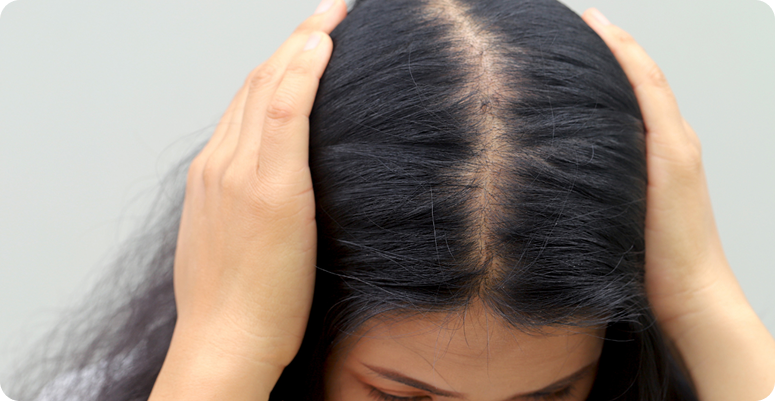
One side effect people often search for is Accutane and hair loss. Some patients report hair thinning, increased hair shedding, or losing hair after Accutane. The good news is that when isotretinoin-related hair loss happens, it is often temporary. The most common pattern discussed in the literature is telogen effluvium, a type of shedding where more hairs than usual enter the resting phase of the hair cycle.
That said, not every case of hair loss during or after isotretinoin is caused by the medication. Stress, nutrition, hormones, thyroid issues, iron deficiency, family history, and other types of hair loss can all play a role.
Will Accutane Cause Hair Loss?
Accutane can cause hair thinning in some patients, but it does not happen to everyone. The American Academy of Dermatology lists thinning hair as a temporary side effect that can happen while taking isotretinoin, along with other effects such as dry skin, sun sensitivity, muscle or joint pain, and vision changes. The AAD notes that these side effects tend to go away after stopping isotretinoin.
A 2022 review in JAAD International looked at reported hair loss in patients taking isotretinoin. The review found hair loss was reported in about 3.2% of patients taking less than 0.5 mg/kg/day and about 5.7% of patients taking 0.5 mg/kg/day or more. This suggests that higher dose isotretinoin therapy may be associated with a higher frequency of hair loss, though individual risk varies.
Micro-dose Accutane, Expert-Guided Treatment with All-Inclusive Care
Start Online EvaluationWorried that you're not a candidate? If the physician deems you ineligible for any treatments your initial consultation is FREE - we'll refund you in full automatically.
Why Can Isotretinoin Cause Hair Thinning?
The exact mechanism behind isotretinoin induced hair loss is not fully understood. Isotretinoin affects the skin by reducing oil gland activity, normalizing keratinization, and reducing inflammation. These effects make it powerful for acne, but they may also affect the scalp environment or hair cycle in some people.
One possible explanation is telogen effluvium. This happens when a stressor, medication, illness, or major body change pushes more hair follicles from the growth phase into the resting phase. Cleveland Clinic explains that telogen effluvium is a temporary form of hair loss that usually appears two to three months after a trigger and commonly improves within three to six months.
In simple terms: isotretinoin may not “kill” the hair follicle. Instead, it may shift more hairs into the shedding phase earlier than expected.
What Is Telogen Effluvium?
Telogen effluvium is a common cause of diffuse hair shedding. Hair normally cycles through growth, transition, resting, and shedding phases. In telogen effluvium, more hairs enter the telogen phase, or resting phase, at the same time. A few months later, those hairs shed.
This can look like:
- More hair in the shower
- More hair on your pillow or brush
- Overall thinner-looking hair
- Increased shedding without bald patches
DermNet notes that telogen effluvium is generally self-correcting and recommends gentle hair handling, treating underlying scalp or hormonal issues, and supporting nutrition.
Is Accutane Hair Thinning Reversible?
For many people, Accutane hair thinning is reversible, especially if it is related to telogen effluvium. Hair regrowth usually happens gradually once the trigger is removed or the hair cycle normalizes. Cleveland Clinic notes that telogen effluvium usually improves within three to six months, and new hair growth can appear after the shedding period.
However, regrowth can take time. Hair grows slowly, so even after shedding stops, it may take several months for density to visibly improve.
You should talk to a dermatologist if:
- Hair loss continues for more than six months
- You notice bald patches
- You have scalp itching, burning, pain, or scaling
- You have a family history of pattern hair loss
- Hair thinning started before isotretinoin therapy
- You are losing hair after Accutane and it is not improving
Can Accutane Make Your Hair Grow?
Accutane is not a hair growth treatment. Some people notice their hair feels less oily while taking isotretinoin because the medication reduces oil production. This can make the scalp feel different, but it does not mean isotretinoin makes hair grow.
If someone feels like their hair is “better” on Accutane, it may be because their scalp is less oily, they are washing less often, or inflammation around acne-prone skin is improving. But isotretinoin is not prescribed to stimulate hair regrowth.
Why Shedding Can Happen After Treatment
Some people experience post Accutane hair loss or notice they are losing hair after Accutane. This can happen because telogen effluvium is delayed. If isotretinoin, stress, illness, dieting, or another trigger shifts hairs into the resting phase, shedding may not show up until two to three months later.
That delay can make it confusing. You may finish isotretinoin, feel like treatment is done, and then suddenly notice increased shedding.
This is why it is important not to assume every case of post-treatment hair loss is permanent. It may simply reflect the timing of the hair cycle.
Who May Be More Likely to Experience Hair Loss From Accutane?
Hair loss risk can vary. Possible contributing factors include:
- Higher dose or longer treatment exposure. The 2022 review found reported hair loss was more frequent in patients taking 0.5 mg/kg/day or more compared with lower doses.
- Family history of hair loss. If you have a family history of androgenetic alopecia, isotretinoin-related shedding may make existing pattern hair loss more noticeable.
- Nutritional or hormonal issues. Low iron, thyroid problems, restrictive dieting, illness, or major stress can also contribute to telogen effluvium.
- Other hair conditions. Not all shedding is telogen effluvium. Conditions like alopecia areata, pattern hair loss, traction alopecia, scalp psoriasis, seborrheic dermatitis, and inflammatory scalp disorders can also cause hair loss.
Micro-dose Accutane, Expert-Guided Treatment with All-Inclusive Care
Start Online EvaluationWorried that you're not a candidate? If the physician deems you ineligible for any treatments your initial consultation is FREE - we'll refund you in full automatically.
How to Help Prevent Hair Loss While Taking Accutane
There is no guaranteed way to prevent hair loss from isotretinoin, but here are some habits that may reduce unnecessary stress on the hair and scalp.
1. Talk to your dermatologist early
If you start to experience hair loss, tell your dermatologist. Do not stop or change isotretinoin therapy without medical guidance. Your provider may review your dose, treatment timeline, labs, health history, and other possible causes.

Book an Appointment with
a Dermatologist
Every Clear Health treatment begins with a licensed, board-certified dermatologist reviewing your skin and guiding your care - safely, thoughtfully, and personally.
Start Online Evaluation2. Avoid aggressive hair styling
Be gentle with your hair. Avoid tight hairstyles, harsh brushing, excessive heat styling, chemical straightening, bleaching, or anything that increases breakage.
3. Support your scalp barrier
Isotretinoin commonly causes dryness. The AAD recommends gentle skin care during isotretinoin therapy, including moisturizers, sunscreen, and avoiding irritating products. While this guidance is mostly skin-focused, the same “gentle” approach can help reduce scalp irritation.
4. Eat enough protein and nutrients
DermNet recommends a nutritious diet with protein, fruits, and vegetables for telogen effluvium support. It also notes that thyroid function, iron, vitamin B12, and folic acid abnormalities should be corrected when present.
5. Avoid unnecessary vitamin A supplements
Isotretinoin is related to vitamin A. The AAD warns that vitamin A supplements can increase the risk of side effects while taking isotretinoin.
Managing Hair Loss From Isotretinoin
If you are experiencing hair loss while on isotretinoin, your dermatologist may consider:
- Checking whether the pattern looks like telogen effluvium, alopecia areata, pattern hair loss, or another condition
- Reviewing your isotretinoin dose and cumulative exposure
- Looking for triggers like illness, stress, recent weight loss, low iron, thyroid issues, or postpartum changes
- Recommending gentle hair care
- Discussing whether treatment adjustments are appropriate
For most people with telogen effluvium, the goal is to identify and remove the trigger when possible, then give the hair cycle time to recover.
When Hair Loss May Not Be From Accutane
It is easy to blame isotretinoin for any hair change that happens during treatment, but hair loss can have many causes. For example, alopecia areata usually causes patchy hair loss and is autoimmune-related. Pattern hair loss often runs in families and may show up as gradual thinning over time. Telogen effluvium usually causes diffuse shedding.
A dermatologist can help identify the pattern. That matters because the best treatment depends on the diagnosis.
Key Takeaway
Accutane can cause hair thinning or increased shedding in some people. Research suggests reported hair loss may be more common at higher daily doses, but it is still not experienced by most patients. When it does happen, it is often linked to telogen effluvium, a temporary shedding condition that can improve after the trigger resolves.
If you are worried about Accutane hair loss, post Accutane hair loss, or hair regrowth after isotretinoin, talk to a dermatologist. They can help determine whether your shedding is related to isotretinoin therapy, another medical issue, family history, or a separate hair condition.
Worried about acne treatment side effects? Book an appointment with a board-certified dermatologist to talk through your options and find out whether isotretinoin, a lower-dose approach, or another acne treatment may be right for you.
Micro-dose Accutane, Expert-Guided Treatment with All-Inclusive Care
Start Online EvaluationWorried that you're not a candidate? If the physician deems you ineligible for any treatments your initial consultation is FREE - we'll refund you in full automatically.
This article is for educational purposes only and is not medical advice. Isotretinoin is a prescription medication with serious risks and should only be used under the supervision of a licensed healthcare provider. Do not start, stop, or change your medication without speaking with your prescriber.
- U.S. Food and Drug Administration. “Isotretinoin Capsule Information.”
- American Academy of Dermatology. “Isotretinoin: The Truth About Side Effects.”
- American Academy of Dermatology. “Isotretinoin: Overview.”
- JAAD International. “Comparing the Frequency of Isotretinoin-Induced Hair Loss at Different Doses.”
- Cleveland Clinic. “Telogen Effluvium.”
- DermNet. “Telogen Effluvium.”
- NCBI Bookshelf. “Isotretinoin.”
Related Stories
Tranexamic Acid for Skin: Can It Really Fade Dark Spots?
Written by Erika Morrison
Published on 09/11/2026

What to Expect When You Start Isoclear™ Topical Isotretinoin
Written by Erika Morrison
Published on 09/03/2026
Rethinking Acne Treatment: Microdosing Isotretinoin and a New Topical Approach
Written by Erika Morrison
Published on 08/28/2026
View All